119 Pediatric Emergency Consultation Support App
A decision support app that helps 119 emergency medical dispatchers classify risk and give guidance according to a standard protocol during pediatric emergency phone consultations
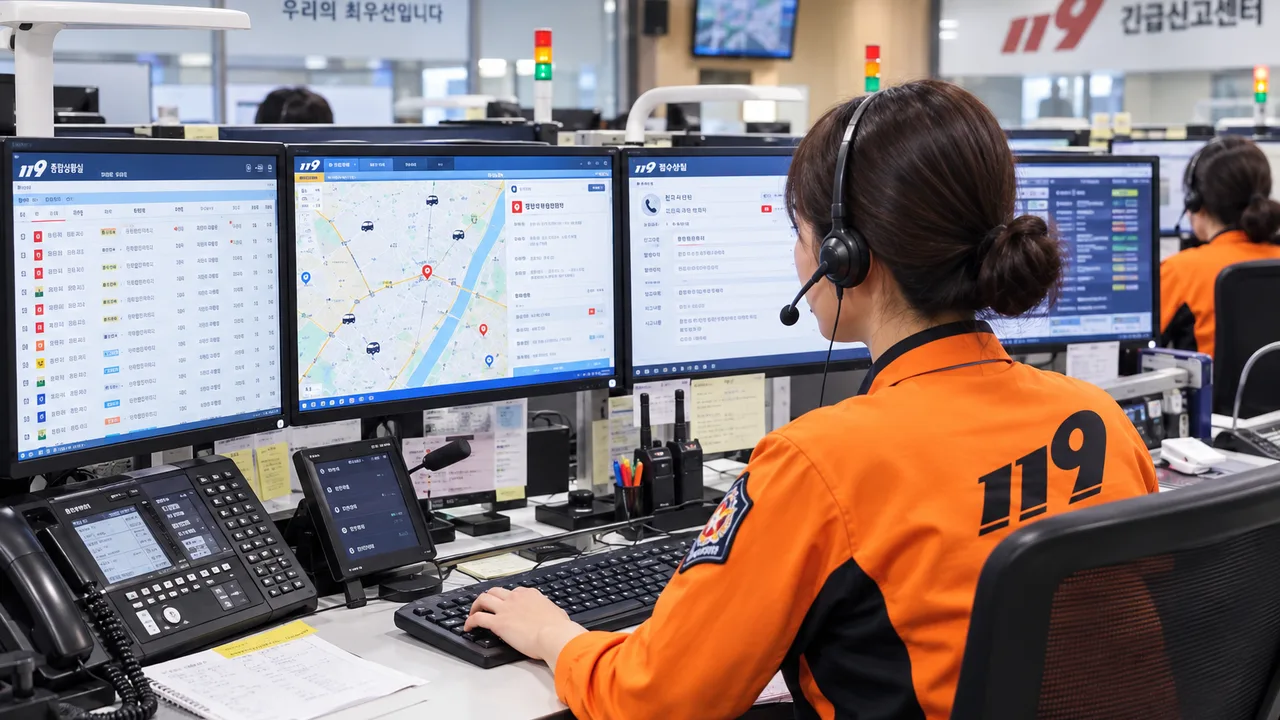
Case Summary
Client
National Fire Research Institute of Korea
Industry
Public safety, 119 emergency medical dispatch
Period
February 2026 - August 2026 (about 6 months)
Challenge
Pediatric emergency phone consultations depended on individual experience, which made fast, standardized guidance difficult
Key features
Protocol embedded for offline use, result summary, reference data management
Outcome
Consultation procedure standardized on screen, usable during a call regardless of network conditions
1. About the Client
- Name: National Fire Research Institute of Korea (국립소방연구원)
- Industry: Research and standards development in firefighting and emergency medical services
- Target users: 119 emergency medical dispatchers
- Challenge: A field tool that supports risk classification and guidance according to a standard protocol in pediatric emergency phone consultations
We were responsible for app development. This is a public safety project, and under security regulations the internal procedures and determination criteria are not disclosed.
2. Background
A 119 emergency medical dispatcher has to gauge the level of risk from the situation on the other end of the phone alone. With adult patients, accumulated experience helps the judgment, but children are different. The same symptom means different things depending on age, and the information conveyed by a panicked caregiver is incomplete.
The harder it is to rely on experience, the more a procedure is needed
Pediatric medical consultations are increasing, but when consultation depends on individual experience, fast and consistent guidance is difficult. This is an area that needs a standard procedure, and that procedure has to be in a form that can be followed right away during a call.
Building a tool to use during a call
Together with the National Fire Research Institute of Korea, we developed an app that supports this judgment from February to August 2026. We were responsible for app development.
In one line An emergency consultation tool must not stall during a call. If it stalls once, it is not used again.
3. Key Features
We built a mobile app that the dispatcher uses during a call. It presents the items to check on screen according to the standard protocol, and organizes and shows the result of the process.
Two conditions mattered most in the design.
It must not stall during a call. It had to work regardless of the network conditions in the dispatch center. Stalling mid-consultation while waiting for data is not acceptable. In an emergency consultation, a delay of a few seconds is reason enough to give up on a tool, and once given up, it is not used again. To meet this, we built it to work offline.
The criteria must be able to change. Medical criteria are revised. If the decision criteria are fixed in the app code, development is needed at every revision. We separated the criteria into data, so that at a revision only the data needs to be replaced, without modifying the code.
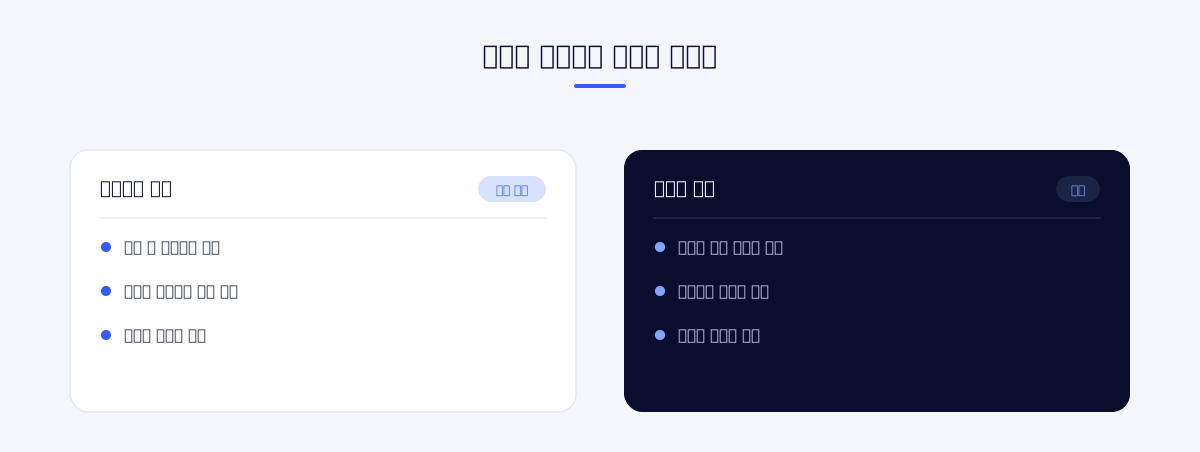
Main features
Offline operation
The necessary data is embedded in the app, so it works without a network connection. This removed any room for communication delays during a call.
Result summary
When the process is finished, the result and the standard guidance text are organized and presented on a single screen. It is laid out so that the dispatcher can give guidance right away during the call.
Reference data management
The version of the embedded reference data can be checked. Revisions are applied by replacing the data, without modifying the code.
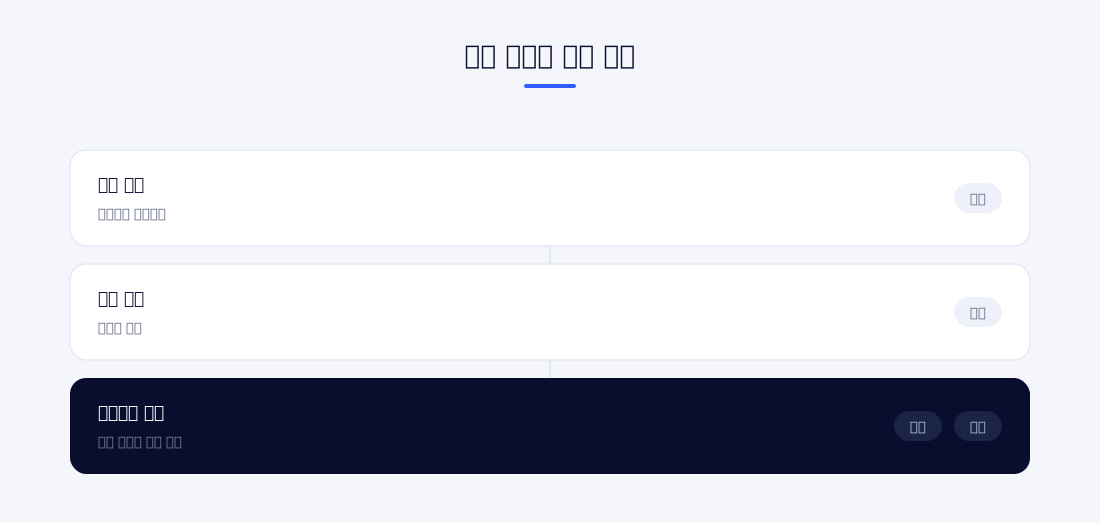
Support for different screen environments
Because the devices in use can differ from one dispatch center to another, the app supports both tablets and smartphones, in both landscape and portrait.
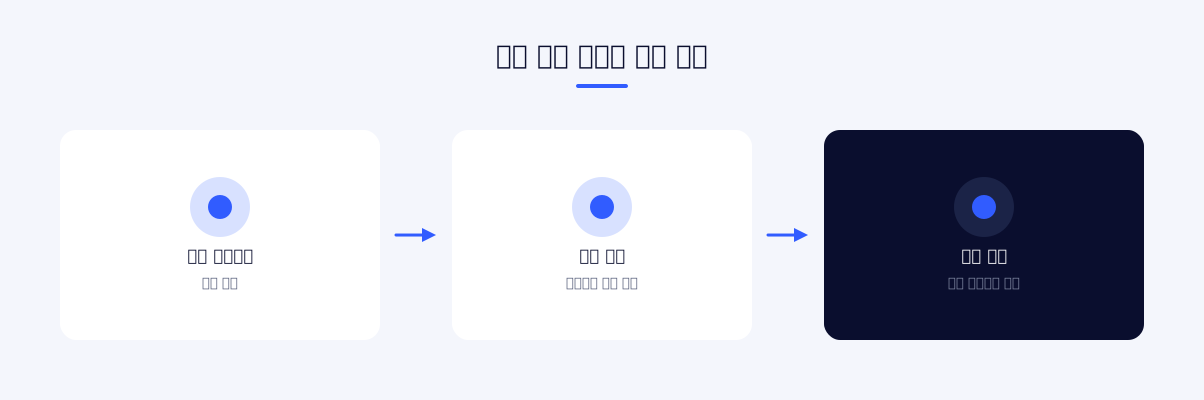
4. Outcome
We built a tool that lets 119 emergency medical dispatchers follow the standard protocol on screen during pediatric emergency phone consultations. The dispatcher proceeds according to a defined procedure rather than from memory, and results are produced by the same criteria.
Because it works offline, it can be used during a call regardless of network conditions. A tool for emergency consultation that does not meet this condition will not actually be used, however good its content is.
With the reference data separated, revisions to the medical criteria can be applied by replacing the data, without modifying the code.
This tool does not make medical diagnoses and does not replace the dispatcher's judgment. The final judgment belongs to the dispatcher, and the app's role is to make sure easily missed items are checked and to keep the criteria consistent.
The project ran for about six months, from February to August 2026.
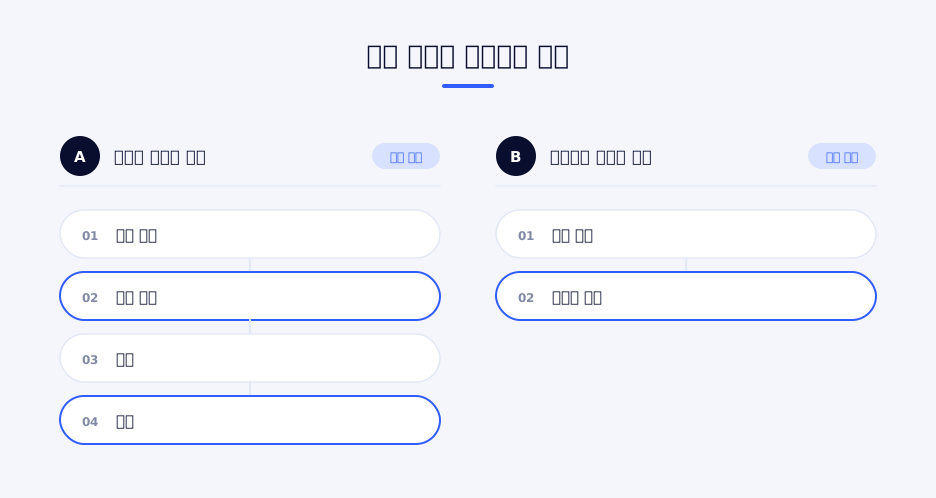
5. Technology
Mobile — React Native with Expo, and TypeScript. Screen navigation uses file-based routing, and styles are written with NativeWind.
Local data — An on-device embedded database (SQLite) is used. The reference data is shipped as part of the app, and we handled the app update process so that data inconsistencies do not occur.
State management — An ongoing consultation is managed as a single session state. The progress is preserved even when moving between screens.
Criteria for technology choices — Every choice came from two conditions: "do not stall the consultation" and "the criteria must be able to change". We removed the dependence on the network and separated the decision criteria into data rather than code.
6. Project Information
| Item | Details |
|---|---|
| Project name | Development of a Pediatric Emergency Consultation Clinical Decision Support System (CDSS) for 119 Emergency Medical Dispatchers |
| Scope of work | App development |
| Technologies | React Native, Expo, TypeScript, SQLite, NativeWind |
Planning a similar project?
Share your requirements and timeline, and we will outline a suitable scope and setup.
Comments 0
Be the first to leave a comment.